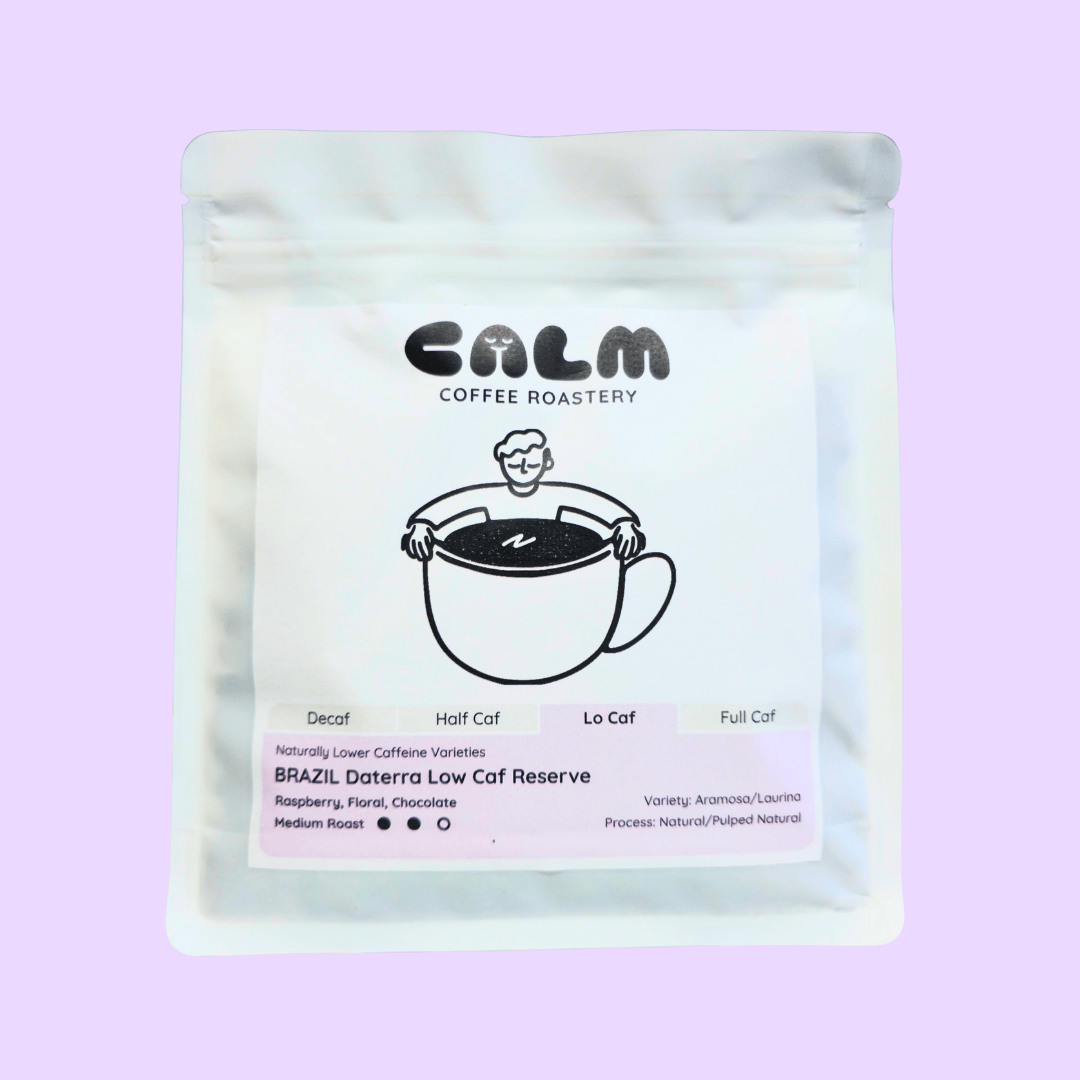
LOW CAF BRAZIL Daterra Low Caf Reserve
Couldn't load pickup availability
Currently Out of Stock.
Explore our lo caf coffees here.
If you’d like to be notified if this coffee returns, join our mailing list here.
A full-bodied, floral low-caffeine coffee crafted from a unique blend of Laurina, a rare Arabica variety, and Aramosa, a hybrid of Arabica and the Racemosa coffee species.
Farm: Daterra
Variety: Aramosa/Laurina
Process: Natural/Pulped Natural
Region: Cerrado
Elevation: 1000-1200m
Harvest: May - July 2024
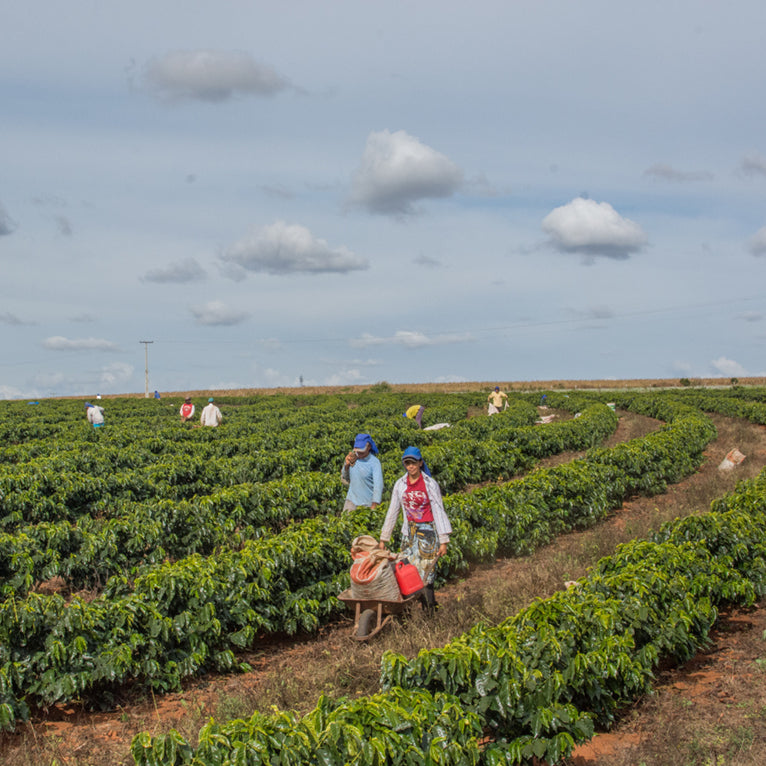
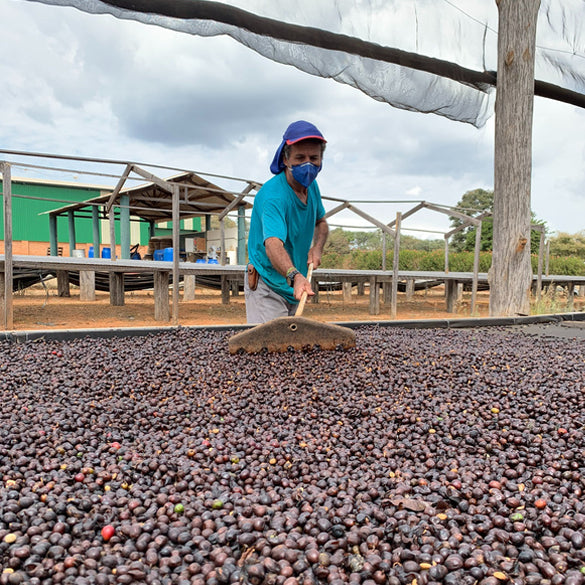
From the heart of Brazil’s Cerrado region, Daterra Coffee is a pioneer in sustainable coffee farming. Founded in 1976, Daterra’s name translates to “From the Earth,” a reflection of their commitment to producing exceptional coffee while respecting the environment. Their farms are among the oldest in the region and are celebrated for producing some of the country’s finest coffees. Their Low Caf Reserve comes from their premium ‘Collections’ range. They are the best coffees from their plantations and are processed using the Daterra Penta Process, which involves advanced quality sorting and finally vacuum packing for shipping to ensure quality is preserved with transportation.
This unique offering is crafted from two rare low-caffeine varietals: Aramosa, a hybrid of Arabica and the lesser-known Racemosa species, and Laurina, a naturally low-caffeine Arabica. After over two decades of research and adaptation to the Brazilian terroir, these cultivars yield a coffee that is both floral and complex, with all the flavour you’d expect from specialty coffee but with a fraction of the caffeine.
Share

What is Lo Caf coffee?
Our Lo Caf coffees are rare coffees that naturally contain less caffeine than typical arabica varieties.
Laurina, a low-caffeine arabica variety, usually contains 0.4% to 0.6% caffeine by weight.
Aramosa, a hybrid of arabica and the low-caffeine species Coffea Racemosa, typically ranges from 0.6% to 1.0%.
Excelsa, a rare species of coffee gaining in popularity due to it's climate resilience, typically has caffeine content of 0.8 to 1.0%
For comparison, most arabica coffees contain 1.4% to 1.6%. These low-caffeine plants are harder to grow—since caffeine helps defend against pests—which makes Lo Caf coffees both distinctive and limited in supply.
For our Lo Caf coffees we lab test our raw (‘green’) coffee for caffeine content before roasting. Testing is conducted using High Performance Liquid Chromatography (HPLC) – a widely used analytical technique for separating and quantifying compounds in food and drink.
Collapsible content
Freshly Roasted
We roast on Tuesdays and Thursdays and dispatch the following day.
Shipping Information
We charge £3.45 for UK shipping using Royal Mail's Tracked 48 Service. Shipping is free for orders of £45 and over.
Recyclable Bags
We have carefully selected our bags to be mono material LDPE 4 and they can be recycled. Local recycling services vary across the UK - for the best chance of success drop the used bags at a recycling point
Our Coffee Commitment
If you are unhappy with your coffee please contact us at hello@calmcoffeeroastery.co.uk and we will try our best to correct the issue.
What our customers say about our Lo Caf coffees
This coffee is amazing
Lots of love and knowledge goes into this
Delicious low caf option for afternoon gym sessions without affecting sleep. Typical flavour profile expected from a lighter roast. Highly recommend.
This is an interesting yet balanced coffee that works well across different brewing methods - it is good for espresso and pour overs like V60.
For me, it has black cherry notes (sweetness yet depth and boldness). It is an interesting coffee that needs a bit of care to bring out its complex flavours but worth the effort.
Delicious coffee.
This coffee from India Mooleh Manay is the most disgusting coffee I have ever tried. It insipidly sweet and slightly cheesy, with licorice root undertones. I have experienced many experimental coffee processes, but this one fails. Sadly, this coffee will need to go in the bin - it is undrinkable!